
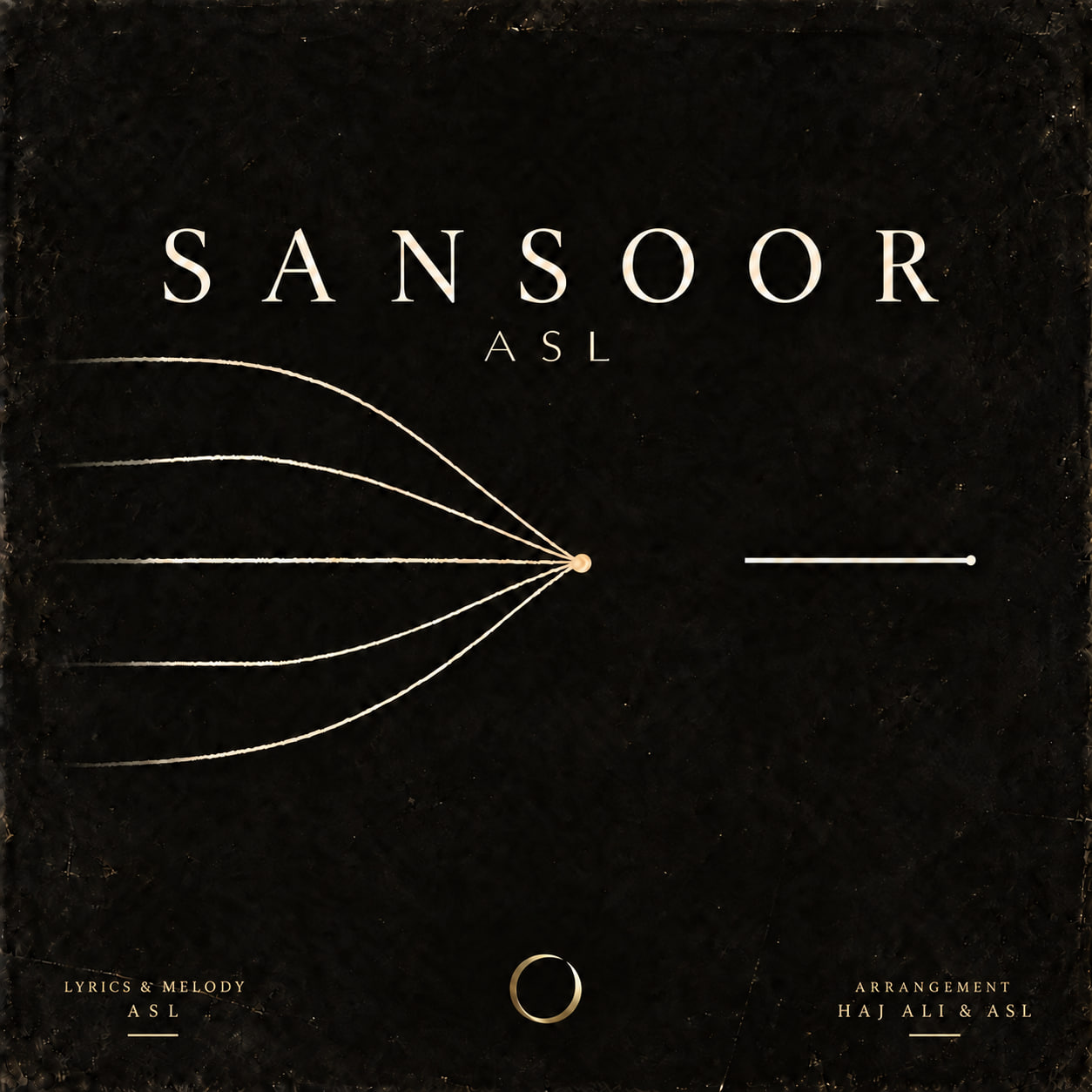
About this release
“Sansoor” is not simply about censorship imposed from the outside. At its core, the song explores a more personal kind of censorship: the kind people place on themselves in order to be accepted. It is about holding back certain thoughts, avoiding certain choices, and gradually becoming a version of yourself that feels easier for others to understand or approve of. The line “I don’t censor myself anymore” stands at the center of the song, representing a decision to stop hiding behind a mask and to stop allowing other people’s judgment to constantly determine what should be said, hidden, or changed.
In the first part of the track, that decision comes with anger and resistance. The line “I don’t want your box” points to the expectations and predefined roles people are often pushed into: how they should live, how they should look, how they should think, and even what happiness is supposed to mean. The narrator is willing to accept the consequences of his own choices, even if those choices lead to failure. When he says, “Let me drown, let me go all the way down,” the idea is not a celebration of failure, but a defense of personal responsibility: the right to make your own mistakes instead of spending your life following a path chosen by someone else.
But “Sansoor” does not remain in a state of anger, and that is what gives the song more depth. As the track moves forward, rebellion gradually turns into acceptance. “You may not understand me, but I understand you” shifts the focus away from winning an argument or proving who is right. Not everyone has to think the same way, and not every difference needs to end in conflict. Sometimes two people may never fully understand each other and can still respect one another’s right to be different.
This is why the line “We need to understand that we’re different, so you can be happy and I can be happy” carries so much of the song’s meaning. Freedom in “Sansoor” is not only about claiming freedom for yourself; it becomes meaningful when you are willing to give that same freedom to others. Distance does not necessarily mean hostility. Sometimes people simply fade from each other’s lives and move on, without one person having to be the villain and the other the winner.
The reference to shaving the hair off or letting it grow is also about more than appearance. It represents the right to change. A person does not have to remain a fixed version of who they once were. Something that feels like an important part of someone’s identity today may change tomorrow, and that change does not automatically make them inconsistent. “Sansoor” defends the right to experiment, evolve, and become different versions of yourself without feeling obligated to justify every transformation to the people around you.
The final section completes the meaning of the title. “I’m Asl, here with all my weaknesses and all my strengths” is not a claim of perfection; it is an act of self-acceptance. Even fear has not disappeared completely. Instead, its meaning has changed. The fears that once stood in the way have become “bridges” and “paths” toward something new. The word “Asl” also carries a double meaning here: it is the artist’s name, but in Persian it also means “original” or “authentic,” reinforcing the idea of standing as the unedited version of oneself, with all the flaws, strengths, fears, and contradictions still intact.
The closing line, “since I killed the censor,” brings the entire idea together. The “censor” in this song can be understood less as an external person and more as the internal voice built from fear of judgment, the need for approval, and the constant worry about what other people might say. “Sansoor” is not about becoming indifferent to everyone and everything. It is about taking control of your life back from that voice. In the end, the song arrives at a simple but powerful idea: being yourself does not require fighting everyone around you. It means refusing to play a role, accepting differences, and no longer allowing the fear of judgment to censor the person you really are.
Lyrics




Comments
1 comment